
In Valencia, the smell of gunpowder is a seasonal certainty — it arrives every day at two in the afternoon for nineteen days each March and then vanishes until the following winter. But the festival that produces it never actually leaves. It's stitched into workshops, neighbourhood casals and a permanent archive that stay open, in one form or another, all twelve months of the year. Visit only in March and you get the fire. Visit any other month and you can watch it being built, argued over, joked about and finally set alight.
The Archive Before the Ash
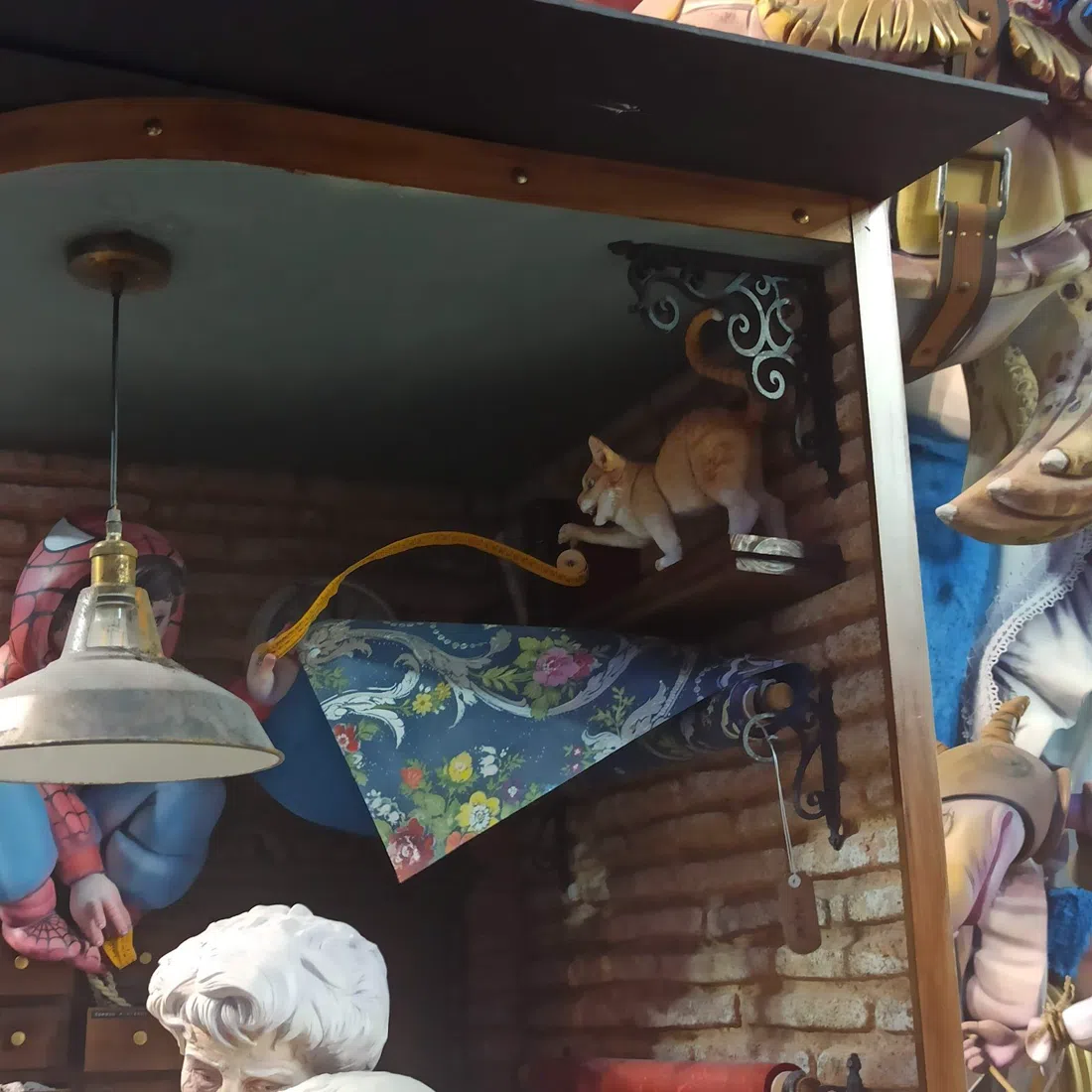
Start with what survives. Every Fallas monument is burned on the night of 19 March except for one figure from each — the ninot indultat, chosen by public vote and spared from the flames. Those pardoned figures end up at the Museu Faller de València, in the Monteolivet district by the old riverbed, which functions as the festival's permanent memory. It's a genuinely useful first stop for anyone trying to understand what a falla actually is before they see one in the street: five-language audioguides walk you through decades of ninots, from crude early-20th-century satire to the sculpted, almost cartoonish figures being built today. Admission is €2, the museum welcomes tour and school groups without fuss, and it's open every day except Monday — last entry is 6pm for individuals, 5pm for groups, so plan the visit for the morning or early afternoon rather than squeezing it in after a late lunch.

If you're in Valencia between February and mid-March, pair the museum with the Exposició del Ninot, the seasonal exhibition where every casal in the city submits its best figure for public judging ahead of the festival. In 2026 it runs from 7 February to 15 March. At €4 for adults and €2 for concessions — with a discounted rate for adult groups of 20 or more — it's the cheapest, clearest way to see the year's craftsmanship up close before it either gets pardoned into the museum or burned in the street. It's also genuinely family-friendly, with none of the crowd density or late-night edge of festival week itself, making it the better choice if you're travelling with kids and can't be in the city for the fire.
Where the Monuments Are Actually Built
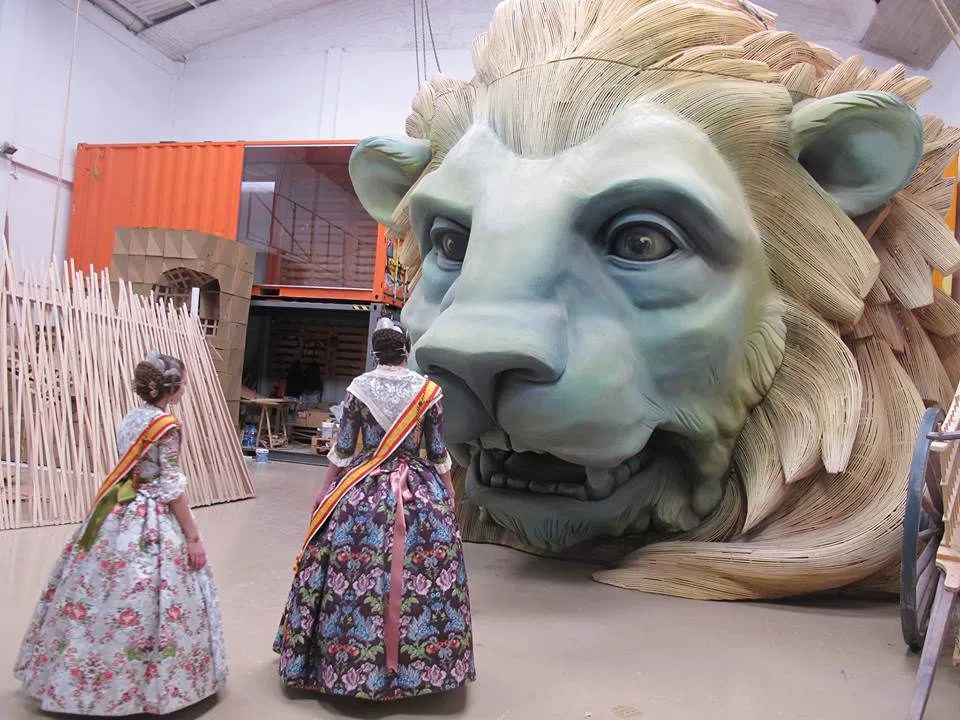
To see where these things come from, go to the Museu del Artista Fallero, at the Ciutat de l'Artista Faller in the Malilla district — the actual working quarter of the guild that constructs Valencia's monuments, not a recreation of one. This is the deepest "how it's made" stop on any Fallas itinerary: workshops, tools, half-finished figures, and the trade itself still visibly practised rather than staged for visitors. General admission is €2 (€1 reduced), but the more interesting way in is a group visit by reservation — email [email protected] directly, or book through an operator like Turiart or Fever, several of which run a combined visit-and-workshop package from around €88 per person that lets you try your hand at the craft rather than just look at it. It's open year-round and closes only in August, which makes it one of the few Fallas sites that actually rewards an off-season visit — you'll see artists mid-project rather than a finished result.
The Jokes Behind the Fire
What gets missed by almost every visitor, festival week or not, is that Fallas is as much a literary tradition as a pyrotechnic one. Each falla is accompanied by a llibret — a satirical pamphlet skewering the year's politics and local gossip, written in Valencian — and the institution that runs the UNESCO-recognised contest for the best of them is Lo Rat Penat, a cultural body based in the old town. It's open to visitors and researchers, runs group bookings for cultural talks, and most of its public events are free to attend. If you only ever see the finished monuments, you're getting the punchline without the joke; a visit here, or simply reading a translated llibret extract beforehand, fills in the half of Fallas that never makes it into a photograph.
Casal Culture, Twelve Months a Year
The monuments themselves exist because of casals — the neighbourhood clubs that commission, fund and build a falla every year, then spend the other eleven planning the next one. Most casals aren't set up for casual visitors, but a few genuinely welcome them.
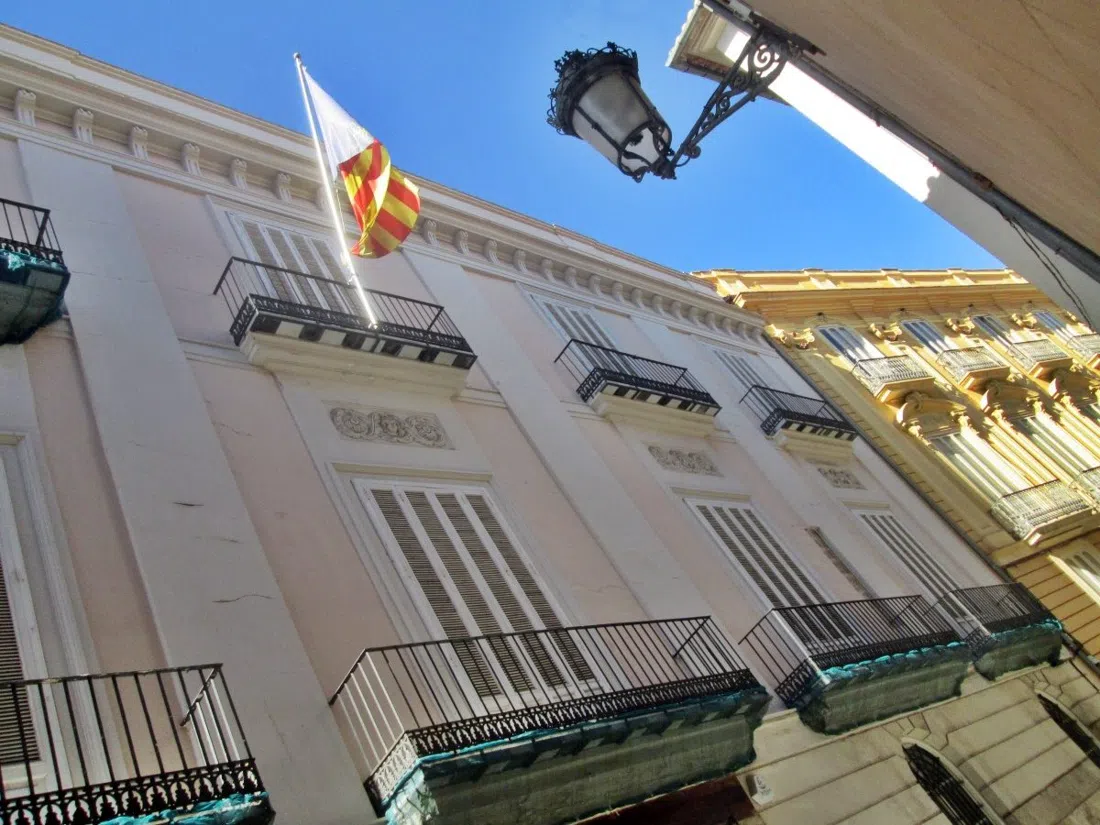
Falla Na Jordana, in the old town, is the standout: its casal runs a real public calendar most of the year — exhibitions, nativity scenes, presentations — and visitors are welcome at these events as long as they respect casal etiquette (this is still a private members' club with its own customs, not a tourist attraction with opening hours). It's the clearest single proof that the festival never really stops between one March and the next.
For something less curated, L'Antiga de Campanar, in the Campanar district a little outside the centre, is worth the detour for anyone who wants Fallas without the performance element. Campanar is arguably the most fallas-steeped barrio in the city outside the old town, and the tradition here feels lived-in rather than staged. Respectful drop-ins are welcome, but it's genuinely best experienced during plantà week (when the monuments go up, in the days before 19 March) or with a local guide who can read the neighbourhood's rhythms for you — turning up cold on a random Tuesday in June will get you a quiet street and not much else.
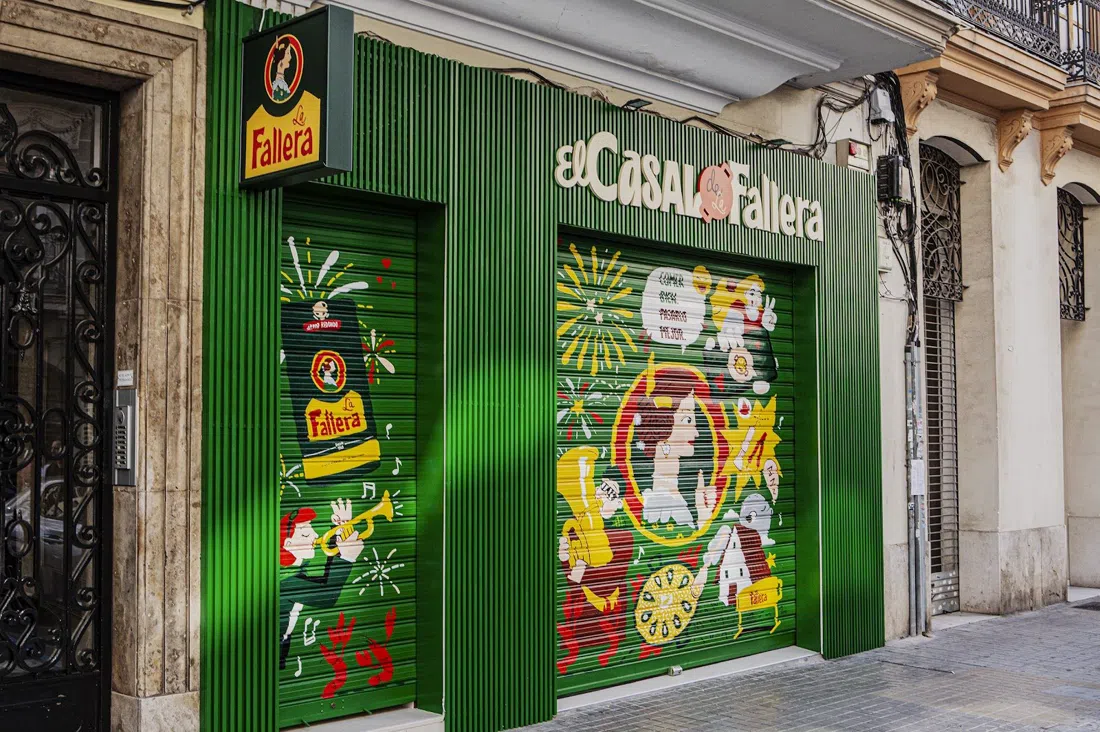
On the more commercial end sits El Casal de la Fallera, a gastronomy and experience space offering bookable group paella workshops through Valencia Club Cocina. It's worth being upfront about what this is: a playful, commercial gloss on casal culture, priced per session, good for visitors who want the food-and-fiesta side of Fallas without festival-week crowds — but it is not a real fallera commission, and shouldn't be mistaken for one. Browsing is free; go in expecting an experience, not an authentic casal visit.
March Itself: The Fire and the Noise
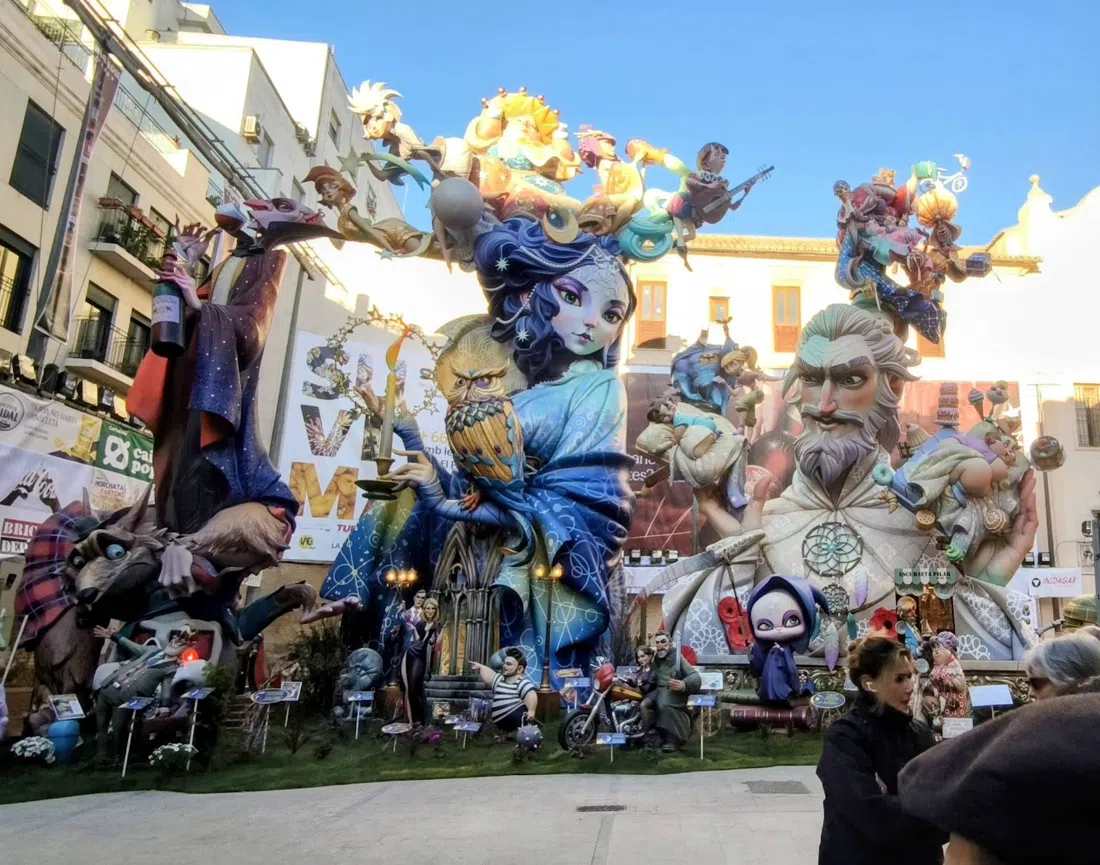
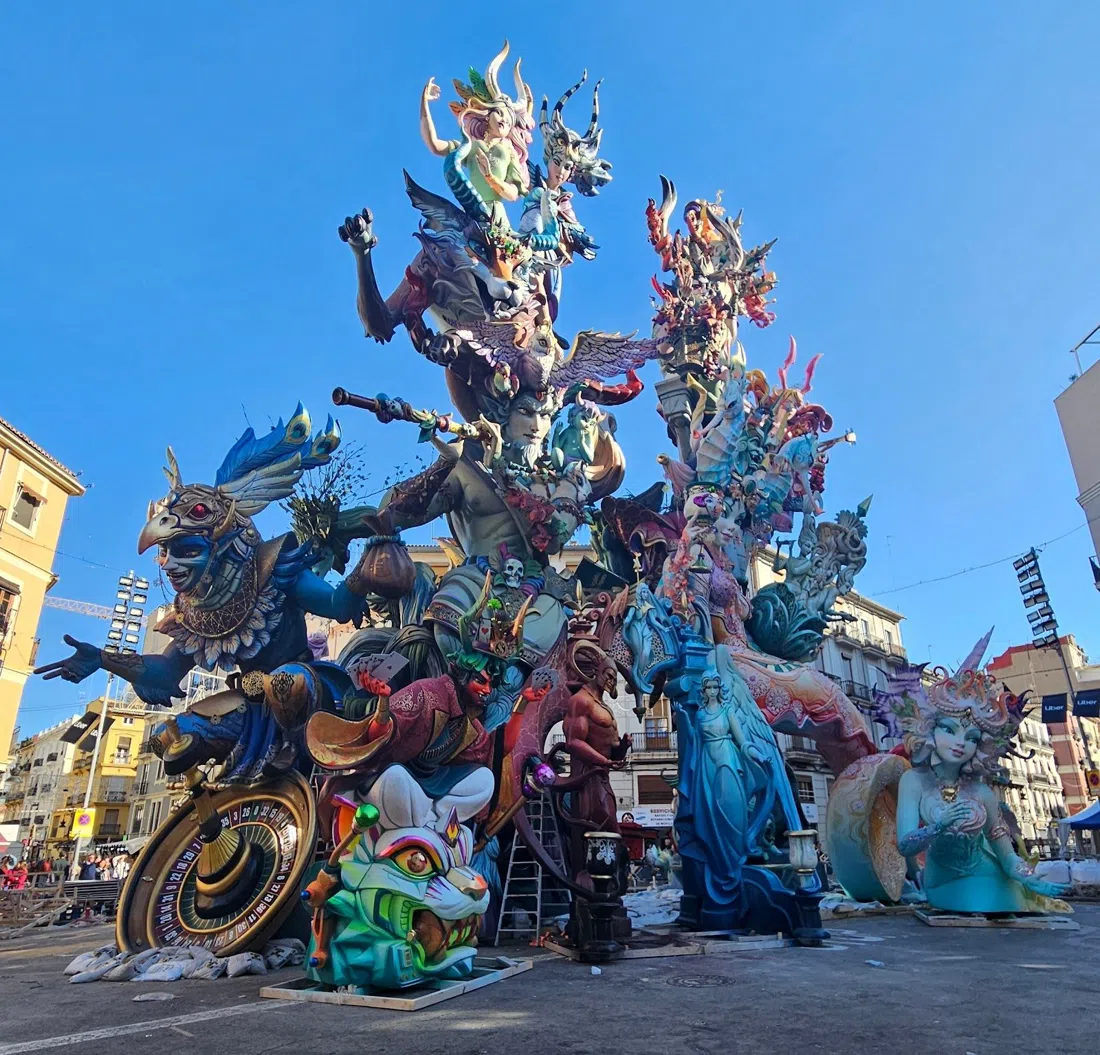
None of the above substitutes for being in the city when it actually happens, and one falla in particular is worth planning around. Falla Convento Jerusalén – Matemático Marzal, in the Extramurs district, was named Best Falla of Valencia for 2026 — the flagship demonstration of how far the craft has come since its origins as crude street satire. The monument and its street are open to the public throughout Fallas week, free to view, and the square is large enough to absorb tour groups without the crush you get at some of the smaller casals' installations.
The daily ritual that defines festival week is the Mascletà, fired every afternoon at 14:00 in Plaça de l'Ajuntament for all nineteen days of March (1–19 in 2026). It's free, unticketed, and a different gunpowder house takes the commission each day — this is a percussion event, not a fireworks display, built entirely around rhythm and volume rather than colour. It's free and open to anyone, but the square fills fast; arrive at least 40 minutes early if you're bringing a group, and expect to stand for the full five minutes once it starts. Bring ear protection if you're sensitive to noise — this is genuinely loud at close range.
The closing spectacle is the Nit del Foc, staged over the old Turia riverbed near the Pont de Monteolivet. This is the visual counterpart to the Mascletà's percussion — a full fireworks display in a free, open riverbed park with enormous capacity. In 2026 the show, El temple del cel valencià, is built by Pirotecnia Valenciana, and it's the single night the city's fire-making trade gets its biggest stage. The park's size means it rarely feels dangerously crowded, but groups wanting a specific vantage point should still claim it early — the best sightlines near the bridge fill up a good hour before the display starts.
Fallas as Fine Art
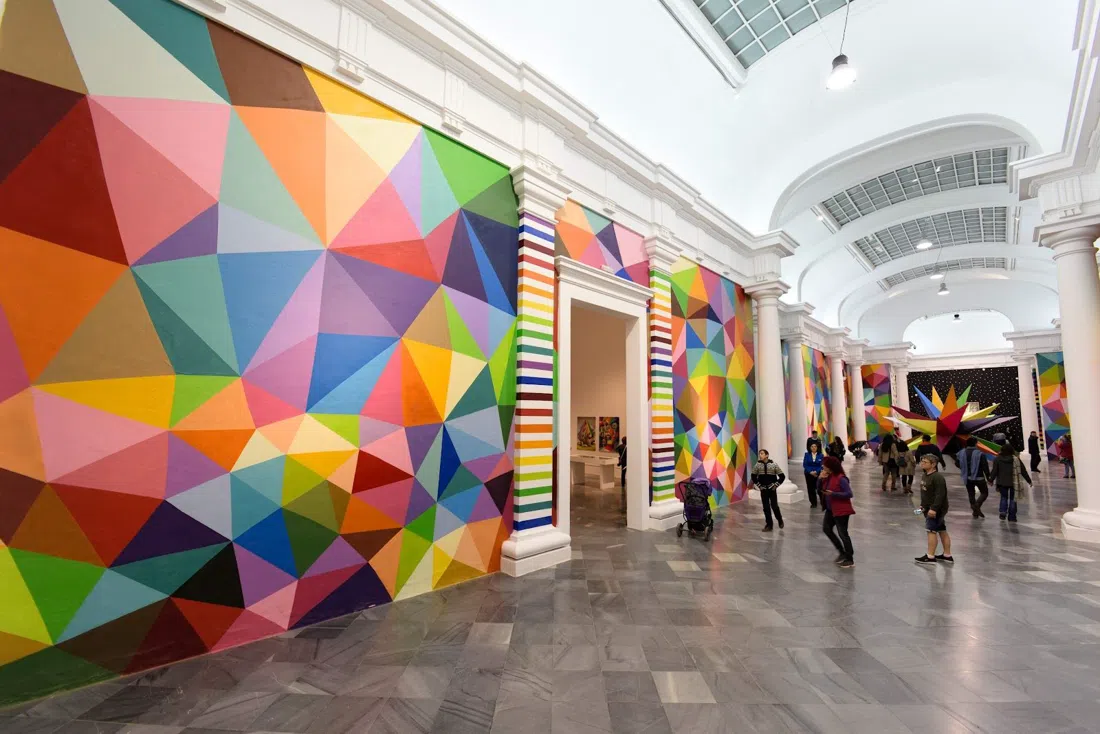
For a completely different register, the Centre del Carme Cultura Contemporània (CCCC), in the Carmen quarter of the old town, treats falla design as contemporary art rather than folklore — a genuinely useful corrective if everything so far has felt more folk festival than design discipline. It's a free public museum, open Tuesday to Sunday from 10:00 to 20:00, group visits welcome, and it runs a recurring annual show dedicated to falla designers that's worth checking the dates for regardless of when you're travelling. It's the one stop on this list that has nothing to do with pyrotechnics or casal politics, and that's exactly its value — it asks you to look at the craftsmanship on its own terms.
Walking It With Someone Who Knows
If you'd rather have all of this connected for you than piece it together from a list, Visit València — the city's own tourism foundation — runs a guided walking tour called "Fallas Throughout the Year" every Saturday, twelve months a year. It's a small-group format, bookable privately if you want your own slot, priced at €35 for adults, €30 for children aged 7–12, and free under seven. The fact that it runs weekly regardless of season is the whole point: it was built specifically to prove that Fallas isn't a nine-day event bookended by silence, but a thread that runs through the city's calendar continuously. For a first visit to Valencia outside festival week, this is arguably the single best-value booking on this list — it does the connecting work the rest of this guide has done on paper.
Getting It Right: Timing, Cash and Logistics
When to come. If fire is the point, book for March 1–19, 2026, and expect accommodation prices in the old town to spike hard around 15–19 March, when the plantà (monuments going up) and Nit del Foc fall. If you'd rather see the craft without the crowds, February through early March — when the Exposició del Ninot is running but the city hasn't yet filled up — is the better trade-off. Outside those months, the museums, the artist quarter and the Saturday walking tour mean there's still a legitimate Fallas itinerary any week of the year.
Cash and cost. Most of what's on this list is free or under €5 — the museum, the Ninot exhibition, the mascletà, both major fireworks nights, and most casal events cost nothing or close to it. The only real spend is optional: the artist-workshop packages (~€88pp) and the guided walking tour (€35 adult). Card is accepted almost everywhere in central Valencia, but small casal events and some workshop bookings are cash-friendlier — carry some euros for anything off the main tourist circuit.
Getting around. Valencia's old town, Extramurs, Malilla and the Turia riverbed are all connected by metro, tram and a genuinely walkable city centre — you won't need a car for anything on this list, and during Fallas week you shouldn't try; several central streets close to traffic entirely for the monuments and the mascletà crowds. Book your stay through Valencia hotel search with proximity to Plaça de l'Ajuntament or the old town in mind if you want to walk to the mascletà daily rather than commute to it.
Group vs. couple. Broadly: the Museu Faller, the Ninot exhibition, the artist-quarter workshops, the CCCC and the Saturday walking tour are all built to handle groups comfortably, with reservation systems and discounted group rates. Falla Na Jordana and L'Antiga de Campanar are the opposite — small, neighbourhood-scale, and better suited to couples or solo travellers willing to move quietly and respect casal etiquette rather than arrive as a tour party. Plan your grouping accordingly, and see the full Valencia guide for where to stay and eat around each of these districts.